



Blog
Sliding Aluminum Glass Doors – An Effective Solution for Catching the Seasonal Breeze

Jun
1. How Do Sliding Aluminum Glass Doors Work?
Sliding doors—also known as gliding or bypass doors—are widely used and have long been a key feature in traditional homes across East Asian countries such as Japan and South Korea, where temperate climates bring distinct seasonal changes.
Today, to keep up with modern architectural trends and customer preferences, these doors have been enhanced with aluminum and glass materials, as well as updated color options and sleek, elegant designs.
A typical sliding aluminum glass door consists of:
-
Aluminum profiles (for door frames and panels)
-
Glass panels (which may include single glass, laminated safety glass, decorative wave glass, or silk-screened glass)
-
EPDM gaskets and a complete set of hardware accessories
In terms of operation, most sliding doors function using a track and roller system. Some advanced models—such as the G120 two-track sliding door from Grand Windows—offer smooth, trackless sliding mechanisms for enhanced convenience.

2. Can Sliding Aluminum Glass Doors Effectively Block Seasonal Winds?
In general, any type of door is capable of separating spaces and helping maintain indoor temperatures. However, the true effectiveness depends on the design, structure, and quality of the door system.
As previously mentioned, sliding doors have long been trusted in homes across countries with harsh winters. Therefore, their wind resistance and thermal insulation capabilities must be truly reliable.
Let’s explore why sliding aluminum glass doors are often considered the ultimate solution for seasonal wind protection:
✅ Key Advantages:
-
Near-perfect air-tight sealing
-
Excellent soundproofing and thermal insulation
-
Strong, durable construction
-
High wind pressure resistance
-
Space-saving design
-
Easy to clean and maintain
Thanks to the combination of EPDM gaskets, strong sealants, and the aluminum-glass pairing, sliding aluminum glass doors offer exceptional tightness—effectively blocking outside wind from entering your space.
In addition, the use of high-performance glass—such as laminated, tempered, or insulated (double-glazed) glass—not only improves sound and thermal insulation but also prevents rainwater from leaking or seeping through the frame.
The hollow aluminum profiles help minimize the transfer of sound and temperature, while reinforced interlocking structures ensure rigidity and longevity. The electrostatic powder coating on the surface acts as a protective layer against environmental elements, extending the life of the door and preserving its appearance.
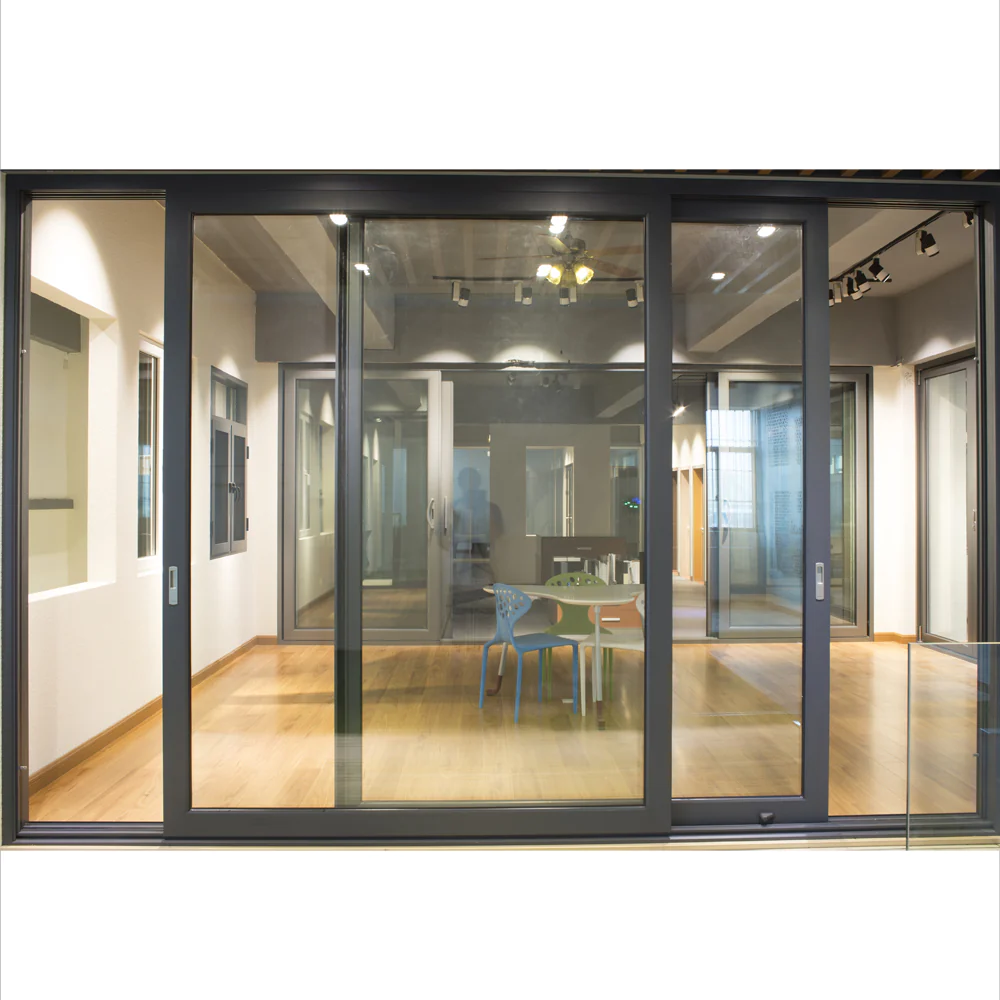
Another highlight is the sliding mechanism itself—smooth, flexible, and easy to operate without taking up interior space. The panels glide effortlessly left or right without requiring force, making them ideal for tight or high-traffic areas.
And perhaps the most compelling reason to trust sliding aluminum glass doors in windy conditions: the glass panels are engineered to withstand wind pressures up to 1,600 pascals. This makes them perfectly suitable for extreme weather regions, including coastal and storm-prone areas.
